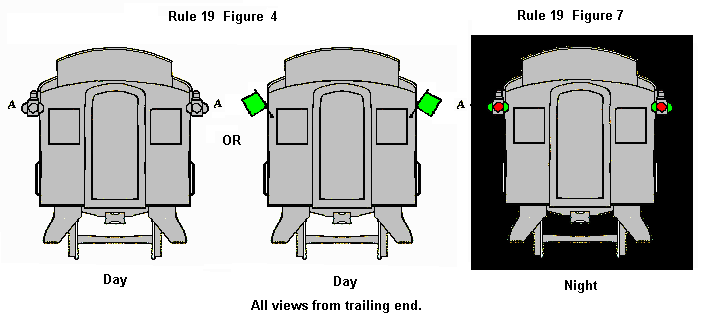
The 1939 edition of The Consolidated Code of Transportation Rules was used for the following diagrams and rules. This rulebook was used by the:(The grey Marker lamps in the following diagrams depict unlighted lamps).
- Great Northern
- Northern Pacific
- Spokane, Portland, and Seattle
- Union Pacific
- Milwaukee Road
It should be noted that not all of these railroads used all of the forms of marking shown below. Also, other railroads used different rulebooks but you will find that the wording of those rulebooks in most cases closely coincides with this rulebook and the wording is often verbatim across different rulebooks.
Markers The rulebook definition of a train is:An engine with or without cars, displaying a marker.Rule 19 states:The following signals will be displayed to the rear of every train, as markers, to indicate the rear of the train.Markers are not simply "tail lights" to prevent a following train from running into the rear end of a preceding train. Markers designate the rear end of a train. Railroad employees need to know that a train is complete. They need to know that part of it has not been left behind either on purpose or accidently. Crews on other trains that must wait for this train need to know when it has arrived in its entirety so that they may then proceed with their own train. Track maintenance crews need to know when a train has arrived in its entirety so that they can then work on the track. Tower operators and station agents need to know when a train has arrived in its entirety so they can report this occurance to the dispatcher.In today's world where the color red is universally used to mark the rear end of automobiles, trucks, and trains it may seem strange that in 1939 some railroads used green flags to mark the rear end of their trains. Even stranger, they used green only in the daytime and used red at night. But the seeds of the red-only-rear-end are already planted int his 1939 edition of the rulebook.
Rule 19(A) states:
A train not equipped to display the required markers will display a red flag by day and a red light by night , to indicate the rear of the train.
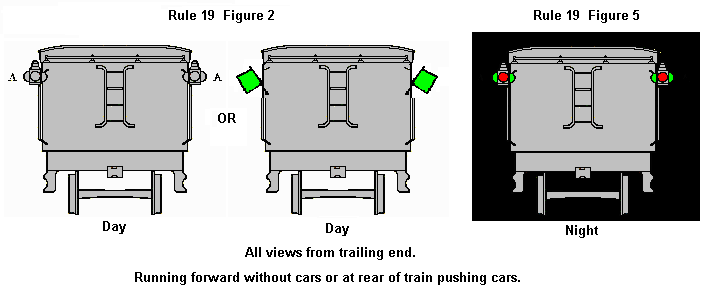
The above diagram depicts the rear end of a passenger train, but the Markers would be the same if it were a caboose or the last freight car of a cabooseless train.The diagram below shows how the Markers would be applied in exactly the same manner to the steam locomotive tender if that loco was running without any cars or if that loco was pushing on the rear of a train.
The diagram below shows how the Markers would be applied to the front of a steam locomotive if that locomotive was running backwards without any cars or if that loco was running backwards while pushing on the rear end of a train.
Note that the headlights are extinguished.
Note that on the front of a steam loco the Markers are the lamps or flags mounted down low on the pilot beam. Do not confuse these low Marker lamps or flags with the higher lamps or flags which are Class Lights that are described later.
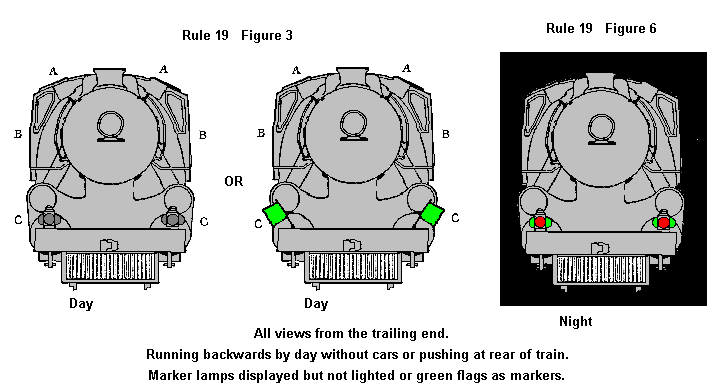
Note that in the left hand drawing of all three diagrams above, the mere presence of the Marker lanterns during the daytime constitute Markers even when they are unlit.
Class Lights and Signals During the long period that railroads were operated by the Timetable and Train Order method the train Schedules were published in the employee's Timetables. These schedules were the actual operating authority for those trains. That is, the Timetable authorized those trains to use the mainline, between the stations listed, at or after the published time of day. Those trains and other trains operated based on these schedules and rules Trains operated in respect to each others' schedules by a collection of rules that kept the trains from colliding.Trains that were operating on a schedule that was published in the employees' Timetable were called Regular trains. Trains that were operating solely by Train Order authority and did not have a timetable schedule were called Extra trains.
Regular trains were one of three classes. Naturally enough they were named; First Class, Second Class, and Third Class. Some railroads also used a Fourth Class. Since the purpose of this discussion is to explain Class Lights and flags, not the nuances of Timetable and Train Order operations, it will be sufficient to say that these different classes exist, and that they do exist is why the about-to-be-discussed lights on locomotives are often called Class Lights. However the proper term for these lamps and flags is Signals.
A Regular train, one authorized by the employee Timetable Schedule, would normally have no Signals on the front of its locomotive. If the Signal lamps are of the permanently mounted type then they would be unlighted. The only light on the front of a Regular train would be its headlight and even that would only be illuminated at night. In the daytime the front of a locomotive on a Regular train would be entirely unlighted. The daytime headlight-on rule did not exist on most railroads until the second half of the 20th century.
Sometimes a Regular train would have so much express or so many passengers or freight cars that it could not be operated as a single train. It must be operated as two or more trains. These multiple trains of the same schedule are called Sections. Since the operating rules that keep trains from colliding and that allow track maintenance personel to safely use the mainlines are based upon the timetable scheduled trains, there needs to be some method of telling other crews and employees that there is more than one section of this train. That method is called Signals.
If a scheduled regular train is running as more than one section then all sections except the last section will be given a Train Order instructing them to "Display Signals" for a following section. The last section will not be given this Train Order so it will run without signals displayed. When crewmen of other trains and other employees see a train go by displaying signals they know by the rules that this is only a section of the train and that another section will be following.
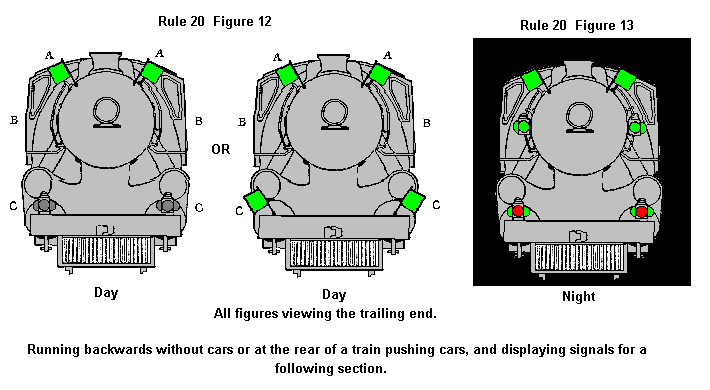
Rule 20 states:
All sections except the last will display two green flags, and in addition two green lights at night, in the places provided for that purpose on the front of the engine.Note that the flags must remain displayed even at night. Also that these green flags and lights always go on the front of the locomotive, not necessarily the end that is leading in the direction of movement.The green flags/lights for the purpose of denoting another section is following are displayed high up on the locomotive not down on the pilot beam where the Markers went. Note that there are no markers displayed since this is not the rear end of the train.
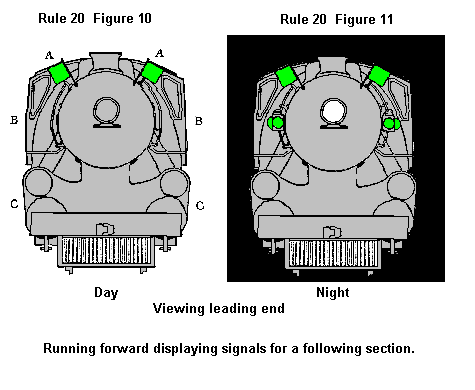
The diagram below is looking at the front of a locomotive that is running backwards moving away from the viewer. Since this would also be the rear end of a light engine move (engine without cars) or the rear end of a helper loco pushing on the rear of a train, these drawings also show Markers displayed on the pilot beam per rule 19.
If instead, the locomotive was running forward either light or pushing on the rear of the train then the green signals would still go on the front of the loco as shown in figures 10 and 11 above and in addition the Markers would be displayed on its tender per rule 19 Figures 2 and 5.Only Regular (Timetable Scheduled) trains can run as multiple sections. Thus only Regular trains can display green flags or lights as signals for a fllowing section. Trains that are not authorized by a Timetable Schedule are called Extra trains. Extras are authorized solely by Train Orders.
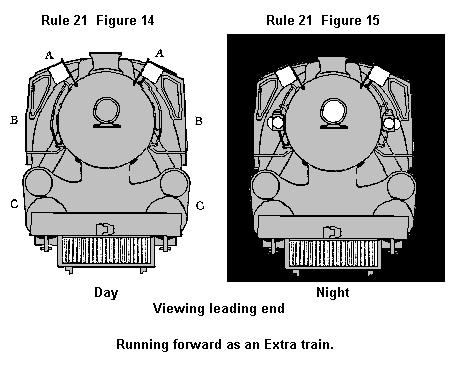
Rule 21 states:
Extra trains will display two white flags, and in addition two white lights at night, in the places provided for that purpose on the front of the engine.
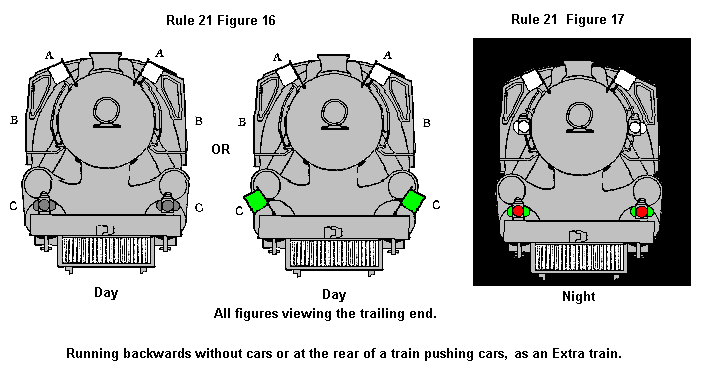
Rule 22 states:When two or more engines are coupled, each engine shall display the signals as prescribed by rules 20 and 21.That means if there are two or three engines pulling the train, all of them will displat the appropriate signals for that train. It also means if there are two or three engines pushing on the rear end of a train, all of those engines will display the appropriate signals for that train. But only the last engine on the rear of the train will display the Markers for the train.
The 1959 edition By 1959 the name of the book had changed to The Consolidated Code of Operating Rules and several more railroads had signed on to it use, including the roads that eventually made up the Soo Line.The display of Markers under Rule 19 remained the same except for the addition of a Rule 19(B) which stated:
When the rear of a train is equipped with built-in electric markers they must be lighted by day and by night. The requirement that markers display green to the front and to the sides will not apply.Obviously this is a nod towards the now ubiqitous diesel-electric locomotives. Similarly Rule 20 and Rule 21 were modified to eliminate the green and white flags, acknowledging the brighter lights of the period.Rule 20. All sections except the last must display two green lights by day and by night on the front of the engine.Rule 22 requiring that all engines on a train display the proper signals for that train remained in effect. But the definition of an "Engine" was changed to read:Rule 21. Extra trains must display two white lights by day and by night on the front of the engine.
A unit propelled by any form of energy, or a combination of such units operated from a single control.So where as multiple steam locomotives were each required to display signals, only the front unit of a multiple unit diesel should display signals because it is only "one engine". In addition an exception was added to rule 22, in block signal territory, dropping the requirement helper engines display signals for the train they are pushing.
| My Home Page |
Created 06-07-2005
Updated 06-07-2005